
Why a Black Person Could Not Have Founded Air BnB

How history shapes entrepreneurship and economic possibility.
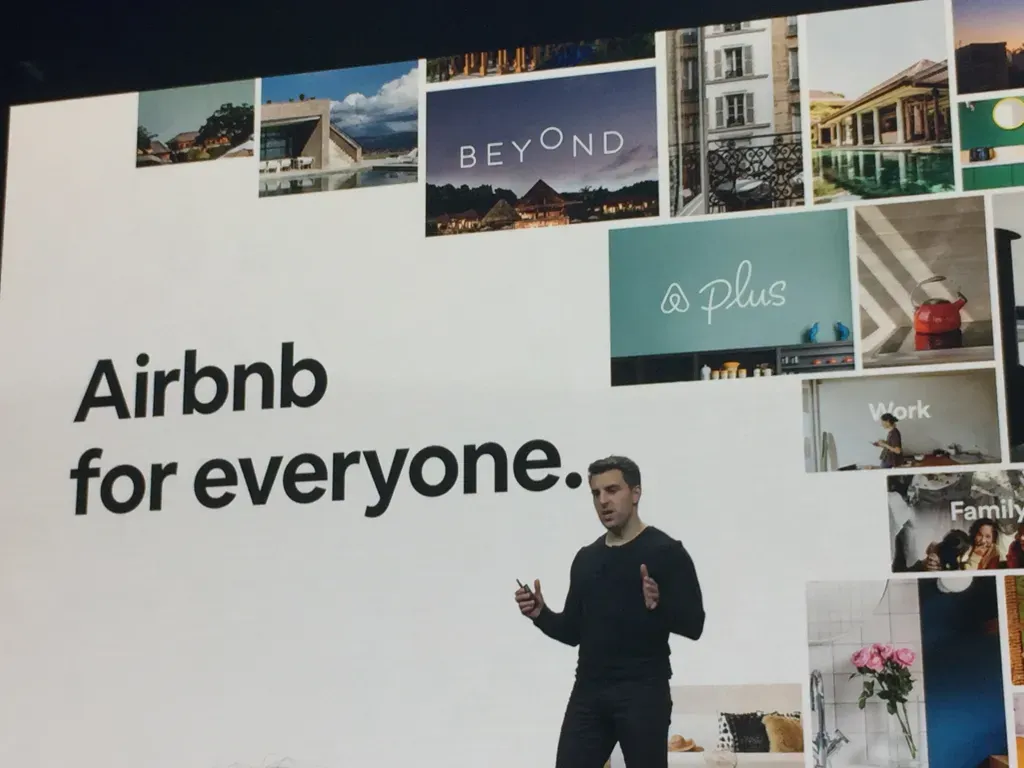
A Black person could not have founded Airbnb.
That statement makes people uncomfortable. It sounds provocative. Some will call it wrong. Others will call it divisive. I write it anyway, not to offend, but to explain something deeper about how history shapes what ideas are even possible and how it impacts entrepreneurship and economic growth.
This is not about talent.
It is not about intelligence.
It is not about hustle.
It is about structure, memory, and risk, and how those things shape imagination itself.
Entrepreneurship is often described as vision or genius. In reality, it begins earlier than that. It begins with whether an idea feels rational to pursue. That judgment is never made in a vacuum. It is made inside history.
The Hidden Weight of “Public Accommodations”
In the United States, “public accommodations” were not always neutral or welcoming. For Black Americans, they were often sites of humiliation, danger, and violence.
After 1865, the end of slavery did not bring freedom of movement or equal access. Instead, Jim Crow laws enforced racial segregation across hotels, restaurants, trains, buses, and towns. Black travelers could not assume they would be served, sheltered, or even survive a stop along their journey.
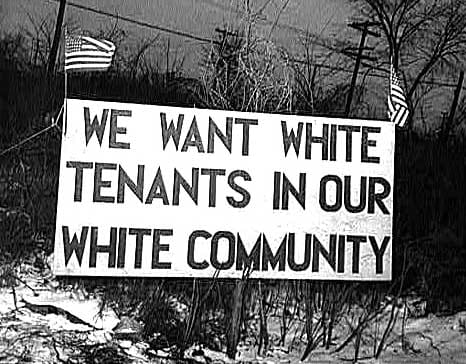
This wasn’t theoretical. It was daily life.
Over time, repeated exposure to danger teaches lessons. Communities learn where risk is punished, where protection is absent, and where mistakes carry irreversible costs. These lessons do not disappear when laws change. They become embedded in how risk is evaluated, quietly, rationally, and often invisibly.
Because of this reality, Black Americans had to innovate, not for convenience but for survival.
The Green Book Was Airbnb’s Ancestor, but With a Crucial Difference
Out of exclusion came ingenuity and innovation. The Green Book emerged as a community-driven survival guide, listing safe Black-owned homes, hotels, gas stations, and restaurants peppered throughout the Jim Crow South. These safe spaces allowed Black travelers to move through hostile territory with some measure of protection.
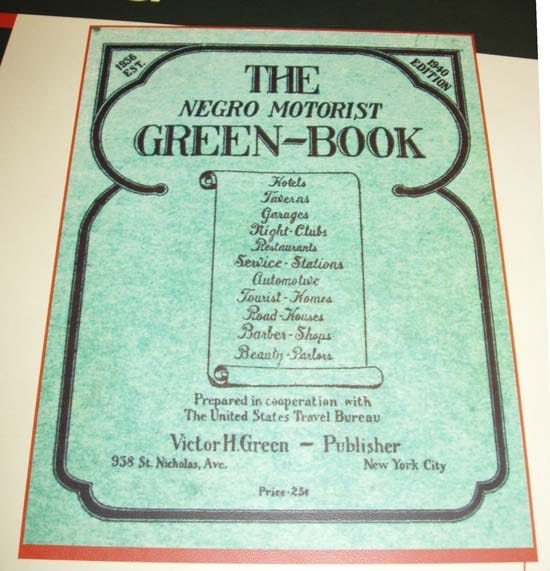
But notice the difference:
- These spaces were not open to everyone, because not everyone needed them
- Trust was narrow, relational, and racialized
- Safety depended on who you were, not simply where you stayed
This was not a marketplace built on openness. It was a network built on self-preservation. That distinction matters, because imagination adapts to history. When openness increases danger rather than opportunity, it is filtered out long before it becomes a business model. For openness to persist, there must be trust.
Airbnb Requires Trust That History Did Not Allow
Airbnb is not just a tech platform. It is a trust system. The product was not lodging. The product was belief. Belief that strangers would respect one another. Belief that institutions would intervene fairly if something went wrong. Belief that one’s presence would be seen as legitimate rather than suspicious.
Early investors worried that this trust might not hold. Some viewed the idea as dangerous, risky, or fringe. But that sense of danger was abstract, economic, reputational, and theoretical.
For generations of Black Americans, danger was neither abstract nor theoretical. Opening one’s home to White strangers was not simply risky. In many places, it was potentially fatal. Even being seen hosting across racial lines could invite retaliation, legal trouble, or violence. Where investors worried about damaged property, Black families had to worry about bodily harm and community reprisal. The requisite openness could not be imagined as a rational option.
Airbnb required multiple forms of trust to hold simultaneously: trust between strangers, trust that institutions would protect rather than punish, and trust that society would allow one to belong everywhere without consequence. For many Americans, history reinforced those assumptions. For Black Americans, history consistently contradicts them.

Given that reality, the idea of Airbnb would not have felt visionary to a Black founder. It would have felt reckless. People do not imagine futures that history has taught them are unsafe to test. What looks like a lack of imagination is often an accurate risk assessment grounded in lived precedent. Airbnb could only be founded by someone whose history allowed openness to feel safe rather than dangerous, a form of the luxury of assuming welcome.
And Even If the Idea Existed, Capital Would Not Have Followed
Let’s assume, for a moment, that a Black founder did conceive of Airbnb. They would still face a second barrier: capital. Venture capital does not fund ideas in a vacuum. It funds pattern recognition (the tendency to back founders who resemble those whom investors have successfully funded before), perceived founder–market fit, and belief in mass adoption.
Historically, Black founders have received a disproportionately small share of venture capital. According to Crunchbase News, Black founders received as little as 0.4–0.5% of total U.S. VC funding in 2024, despite Black Americans making up roughly 13% of the U.S. population (1). Furthermore, Black founders raise significantly less capital, even controlling for stage, than non-Black founders when they do secure funding. This persistent disparity reflects not just gaps in access, but uneven distributions of investor confidence and perceived opportunity. Research further shows that venture investors tend to favor founders who resemble the existing investor base, a form of structural pattern recognition that shapes who is perceived as credible, scalable, and safe to back (2, 3, 4).
This matters because capital determines which experiments are allowed to run long enough to generate proof. When failure carries asymmetric consequences, fewer founders are permitted to test ideas at scale, not because the ideas lack merit, but because the downside of failure is priced differently depending on who is proposing them. So even if the idea survived cultural skepticism, it likely would not have survived a pitch meeting.
This Is Why Representation in Capital Matters
So, what do we do about this? How do we address this system feature? The answer is not symbolic inclusion, but structural participation in the decisions that shape risk, capital allocation, and experimentation. This is not about blame. It’s about design. An entrepreneurial ecosystem built by a narrow group will only see a narrow range of problems and solutions. If we want innovation that serves everyone, we need founders and investors from every community, in large numbers! That includes Black founders, Black angel investors, Black venture capitalists, and institutions that train and support them.
John Hope Bryant, famed financial literacy expert, states that “There are not enough White, college-educated men in the United States to sustain the economy long term.” That’s not an insult. It’s a demographic reality. It’s ‘mathematics’, according to Bryant. For sustained US economic solvency, there must be a substantially more diverse entrepreneurial ecosystem, one where Black people make investment decisions.
Venture Literacy Is Infrastructure
Financial literacy is now widely accepted as a foundational principle of success. Capital literacy and venture literacy should be treated the same way. These are not niche skills for financiers. They are civic competencies that determine who owns systems, who governs outcomes, and who participates in value creation rather than merely consuming it. They should be treated as part of the core civic infrastructure that determines who can participate meaningfully in the economy. Capital and venture literacy do not erase history, but they create the conditions under which its constraints can be challenged.

Capital and venture literacy are how ownership becomes understandable, attainable, and actionable. Ownership changes how people see the world. When individuals understand how capital is formed, they begin to see the economy differently. They learn that capital is aggregated, not merely earned. It’s built by pooling wages, savings, and institutional resources rather than individual effort alone. They learn that capital is structured into ownership vehicles such as equity, funds, holding companies, and trusts, which determine who controls assets and claims future value. They learn that capital grows through risk-bearing, not labor alone, by accepting uncertainty in exchange for upside. They learn that capital formation is governed by rules and incentives, including legal, tax, and contractual structures that shape outcomes long before merit is assessed. And they learn that capital ultimately determines who captures upside as value scales, deciding who benefits when ideas become institutions. This understanding fundamentally shifts posture. People stop experiencing the economy as something that happens to them and begin to recognize where power, leverage, and agency actually sit.
This matters because the Black community is overwhelmingly positioned as a consumer market, not an ownership class. The Black community generates demand but captures relatively little of the upside. Without capital literacy and venture literacy, that pattern reproduces itself regardless of effort or talent.
Venture capital investing, like life, is a contact sport. One cannot learn it by observing outcomes as a consumer, from the sidelines. One learns by sourcing opportunities, evaluating risk, allocating capital, and living with the consequences. One learns by practicing. Furthermore, practice expands imagination and builds competency. Through practicing venture capital investing, one is exposed to new business models, ideas, and possibilities. Exposure is what determines which futures feel realistic rather than theoretical. To achieve the capital literacy needed, Black investors must be active participants. Otherwise, the current hierarchy will be preserved.
If a different outcome is truly desired, different participants must have real access to the game. That means more people who are fluent in capital, comfortable with ownership, and capable of moving from consumption to control. That shift is not just good for Black communities. It strengthens the economy by broadening who builds and governs it. And yes, it is good for the global economy, also, because systems designed by a wider set of stakeholders tend to optimize for resilience, not just extraction.
Final Thought
This essay isn’t about who could or could not have the idea. It’s about what history made safe for certain people to pursue, and dangerous for others to even attempt. Understanding that doesn’t divide us. It helps us design a future where more ideas are possible, for more people. And with this understanding comes the responsibility to do something about it.
Selected References
- Glasner, J. (2025, January 31). Share of startup funding for Black Founders Hits Multiyear Low. Crunchbase News. https://news.crunchbase.com/diversity/startup-funding-share-black-founders-down-cleantech-healthcare/?utm_source=chatgpt.com
- Bias and discrimination in fundraising - The Holloway Guide to Raising Venture Capital. Holloway. (n.d.). https://www.holloway.com/g/venture-capital/sections/bias-and-discrimination-in-fundraising?utm_source=chatgpt.com
- Bengtsson, O., & Hsu, D. H. (2010). How do venture capital partners match with startup founders? SSRN. https://ssrn.com/abstract=1568131
- Aram. (2025, June 12). Venture Capital Diversity: The non-obvious solution. The VC Factory ’ Mindset-Based Investing. https://thevcfactory.com/venture-capital-diversity